Custom software design
Designing software for people
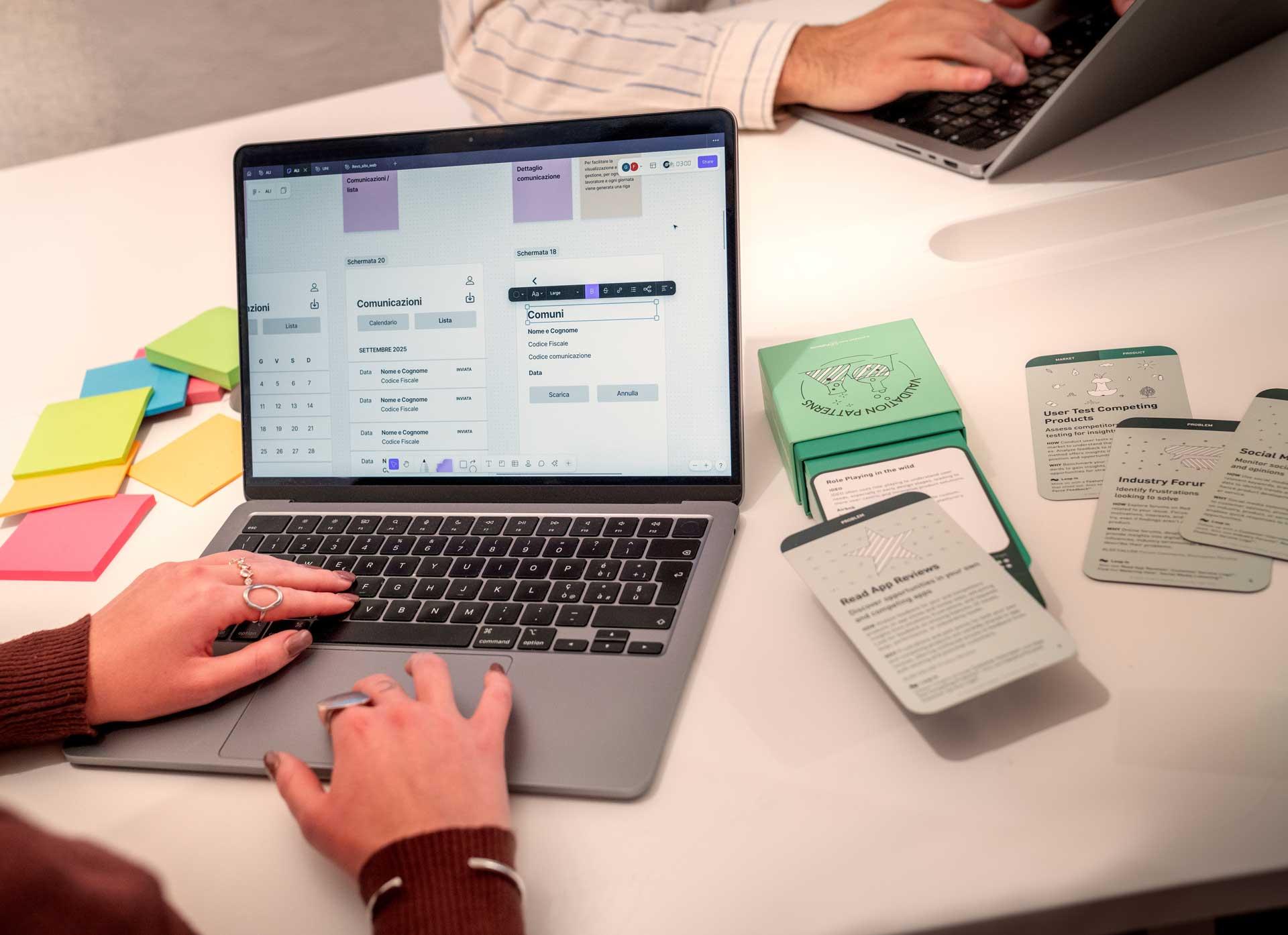
Software design isn’t only visual polish. It’s especially about how people interact with the system, understand information, and complete their tasks.
Well-designed software is easy to navigate and efficient to use. When design is neglected, even technically sound software can feel hard.
Design is therefore central to digital products: turning processes, needs, and features into clear interfaces and understandable interactions.
From problem to interface
Software design starts with the context of use. Who are the users? What work must they do? What information must they see and manage?
From there we define flows, information architecture, and interaction patterns—then move to interface design.
That avoids shallow solutions and builds tools that help the people who use them daily.
Design for complex digital products
Many products today are large systems: SaaS, enterprise applications, mobile apps, or integrations across services.
Design must handle rich functionality, data, and interactions—keeping complex systems usable while balancing simplicity with capability.
Good design reduces perceived complexity and improves the experience even in very rich applications.
Discovery workshops
Before designing screens or features, it often helps to invest in understanding the problem and defining the product.
Discovery workshops analyze existing processes, clarify goals, and define core functionality—building shared product vision before development.
Design systems
As digital products and teams grow, keeping interfaces consistent gets harder.
A design system collects UI components, design rules, and interaction patterns so new features stay visually and behaviorally coherent.
That speeds development and makes long-term evolution easier.