Design system
A system to design and evolve interfaces
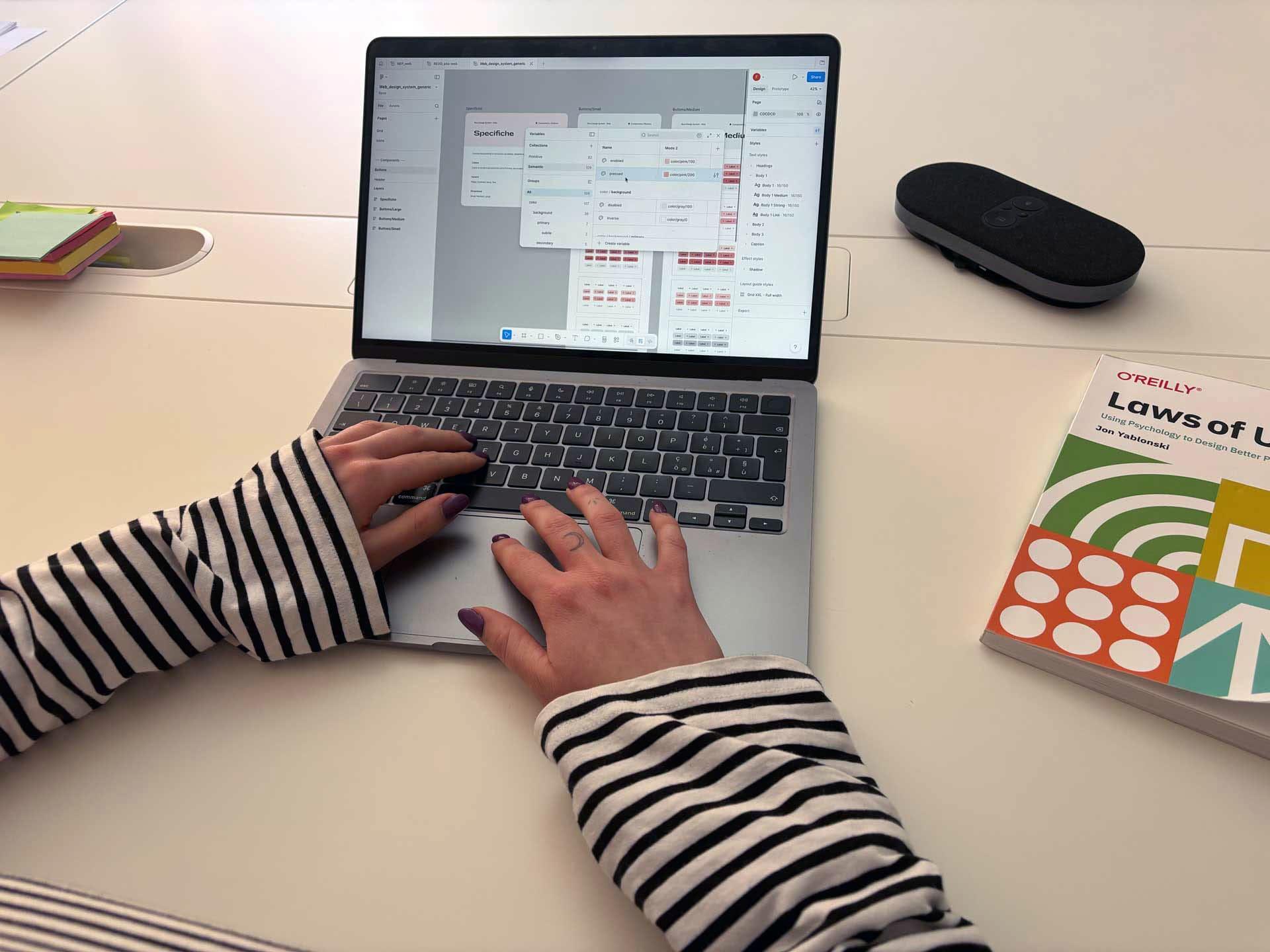
As a digital product grows, its interface grows more complex too. New features, new engineering teams, and new channels can make consistency across the product harder to keep.
A design system exists to address that. It’s a structured set of UI components, design rules, and interaction patterns that guide how interfaces are designed and built.
That lets the product evolve while keeping a coherent visual and functional language.
Reusable components and shared rules
At the foundation are reusable UI pieces: buttons, forms, tables, navigation patterns, and other core building blocks.
Alongside components you define usage rules, design guidelines, and interaction principles—so designers and engineers share the same references and reduce ambiguity.
The aim is a common base that makes new features easier to design without reinventing the same patterns each time.
Aligning design and development
An effective design system isn’t just a graphics library—it’s a shared tool between people who design interfaces and people who implement them.
Design and software components are shaped together so what’s defined in design can be implemented consistently in code.
That narrows the design–development gap and helps the team stay aligned as the product evolves.
Supporting product growth
Digital products change over time: new capabilities, more users, and often a larger team working on the software.
A design system helps manage that growth—keeping interfaces organized, speeding up new feature work, and delivering a more consistent user experience.
The software can evolve without losing clarity and quality in how people interact with it.