Flutter app development
Multiple platforms, one codebase
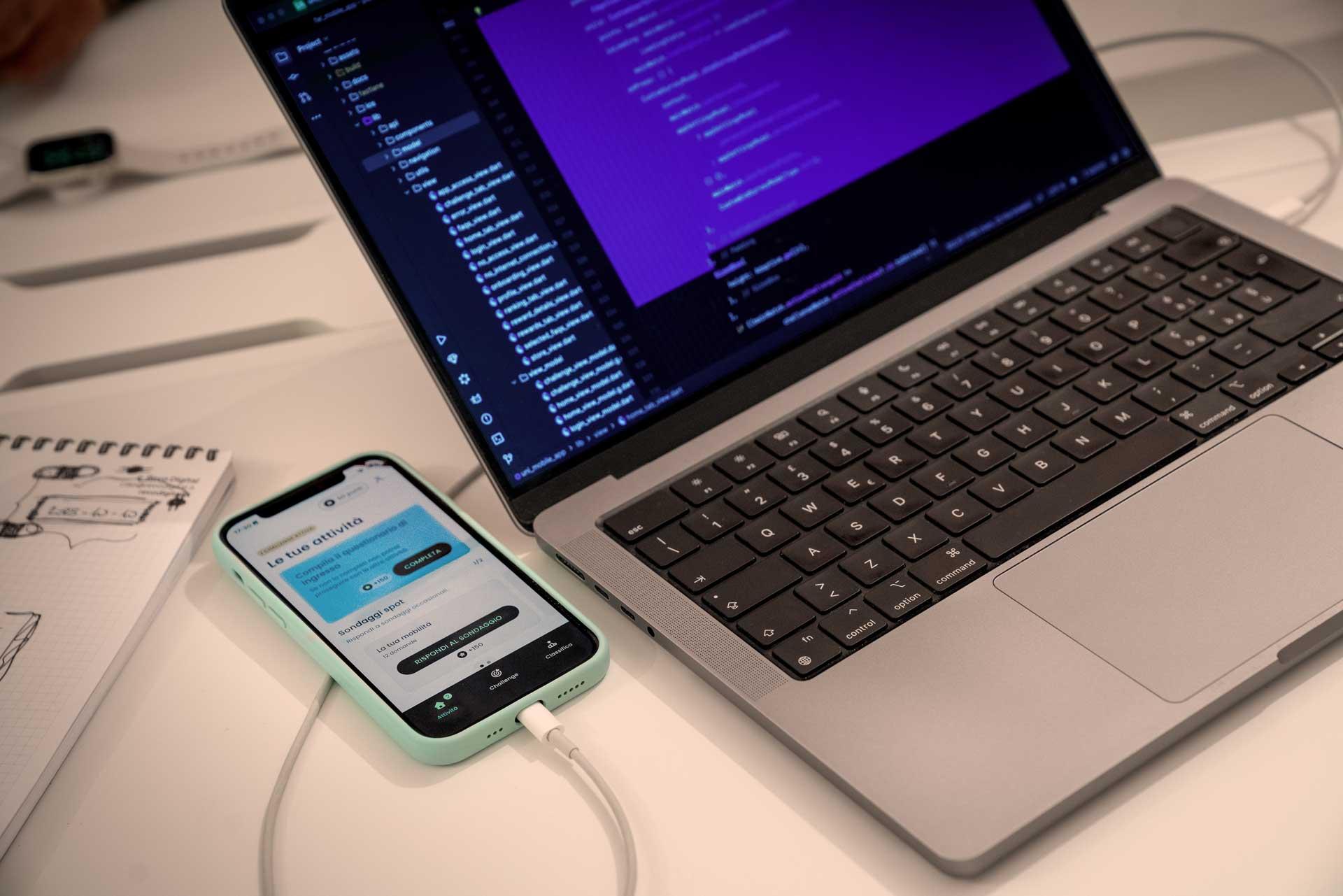
Flutter is Google’s open-source framework for building iOS and Android apps from a single codebase—reducing development complexity and simplifying long-term product care.
For many digital products it’s an effective way to ship mobile apps with good performance and consistent UI across platforms.
Flutter fits especially when you want an app that can evolve quickly and plug into existing digital platforms.
When to choose Flutter
Flutter is often a good fit when the mobile app is the front end of a broader digital service.
It works for SaaS-linked apps, digital products, online services, or IoT systems—where the app talks to backends and cloud APIs while Flutter handles the mobile experience.
Cross-platform keeps experiences aligned across devices and eases future product changes.
Benefits of cross-platform development
A major Flutter advantage is maintaining one codebase for multiple platforms.
That simplifies shipping features, maintaining the app, and keeping iOS and Android in sync—one project, less duplication, less overhead.
Flutter also provides strong UI tooling and performance suited to most digital products.
Integration with platforms and digital services
Flutter apps often front larger digital platforms, connecting to cloud backends, SaaS, or IoT via APIs and web services.
Mobile becomes one entry point to the product’s software ecosystem, letting people use services on the go.
Getting app, backend, and cloud integration right is central to scalable mobile development.