MC2 Smart Plug
Turning port pedestals into intelligent systems
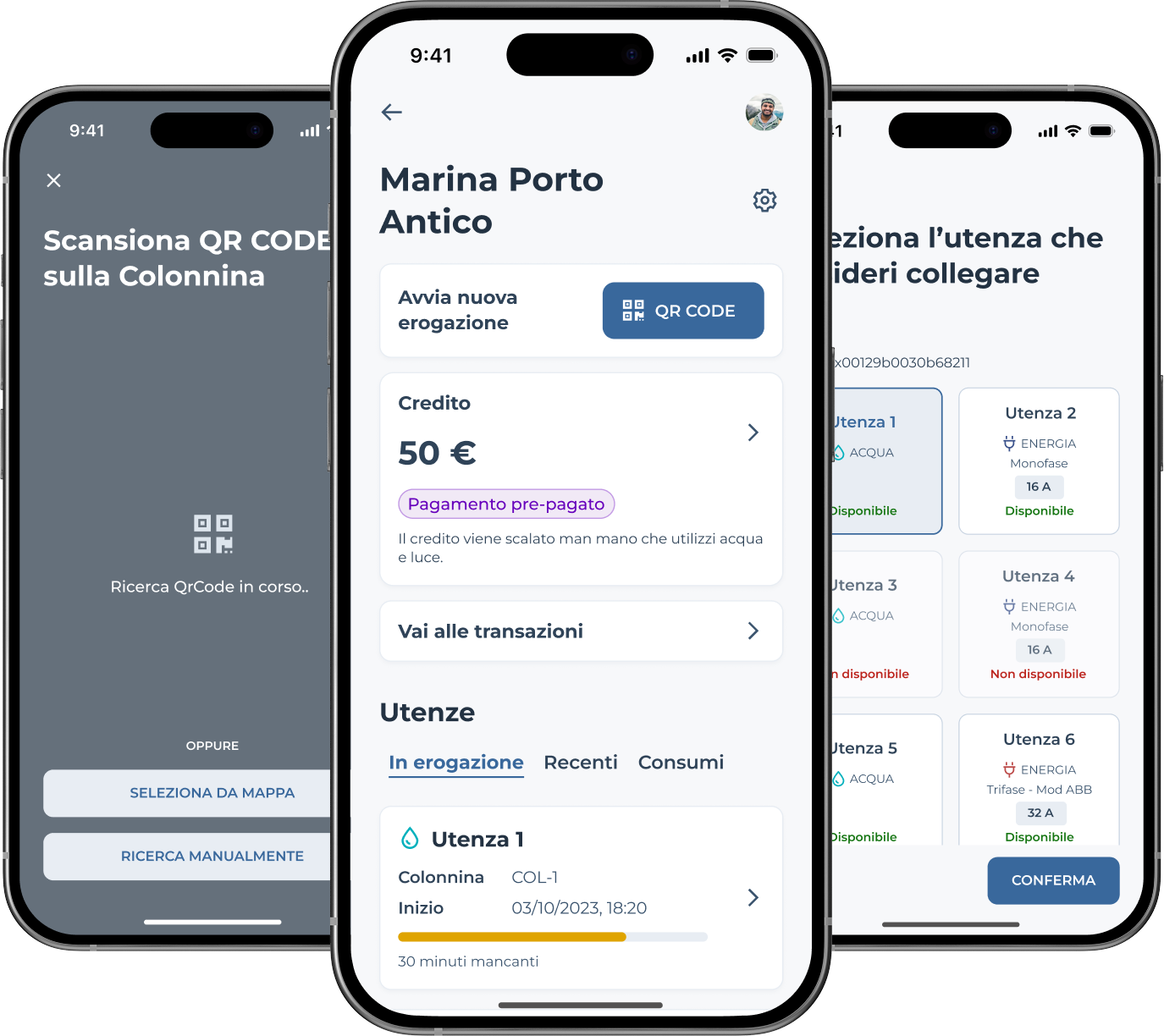
MC2 Smart Plug is a complete system for managing port infrastructure digitally: three apps for three different users, a backend that talks to hundreds of IoT pedestals, automatic consumption billing, real-time alerts.
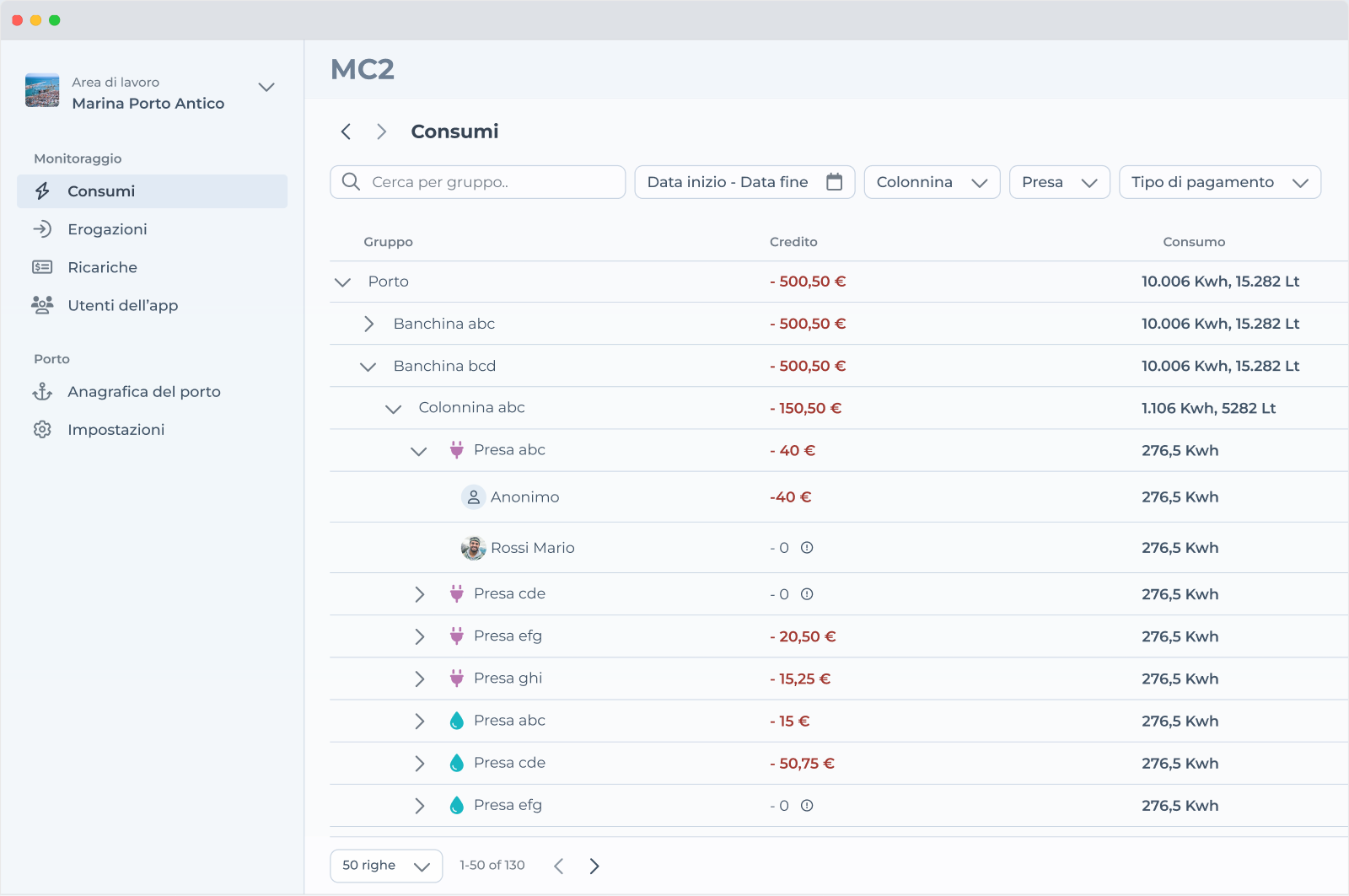
Port consumption table for the Administrator
In many scenarios, port pedestals still work like they did decades ago: boaters plug in cables, consume power and water, and nobody really knows how much, who, or when.
Result: inaccurate flat-rate billing, invisible waste, undetectable theft, and manual operations that don't scale. With dozens or hundreds of berths, chaos is guaranteed.
SHD had solved the hardware problem with an innovative technical choice: IoT electronics on the Zigbee protocol. But they needed the full software stack to make it all work.
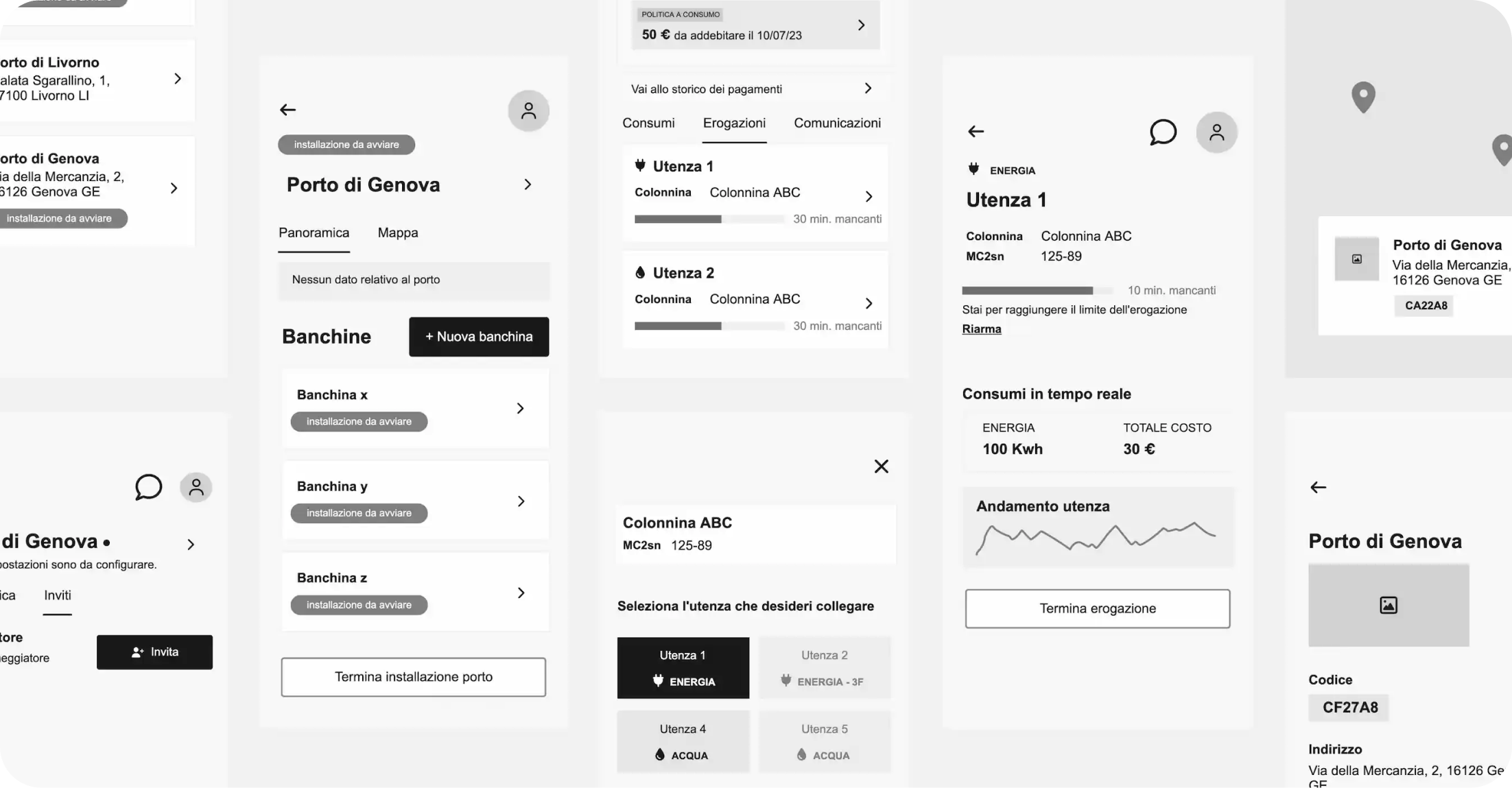
Three apps for three different users
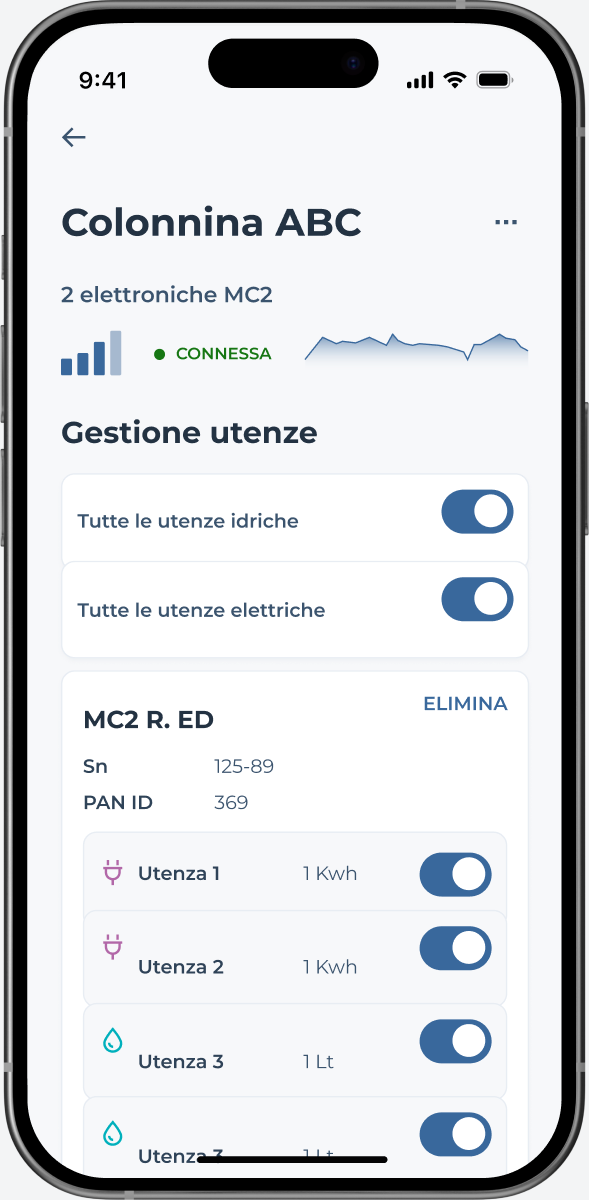
Installer app
The technician scans the pedestal QR, places it on an interactive port map, and sets how many outlets it has. If they miss something, the system runs auto-discovery: it automatically recognizes new pedestals from IoT messages.
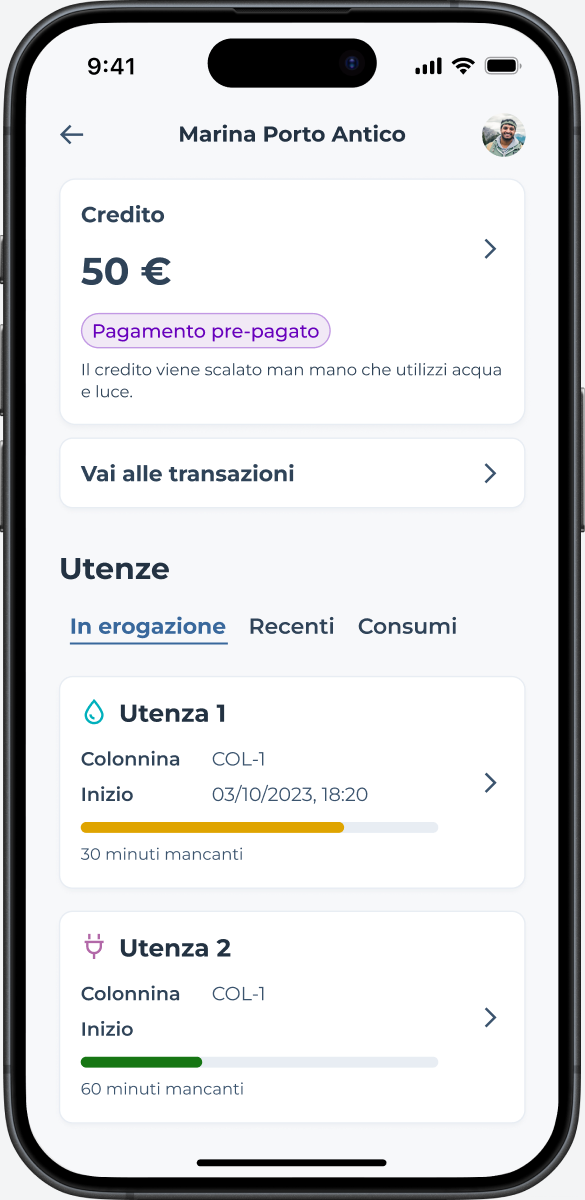
End-user app
The boater scans the pedestal QR, picks energy or water, and plugs in. The system tracks consumption and bills automatically. Prepaid with credit that updates in real time, or postpaid for regular clients.
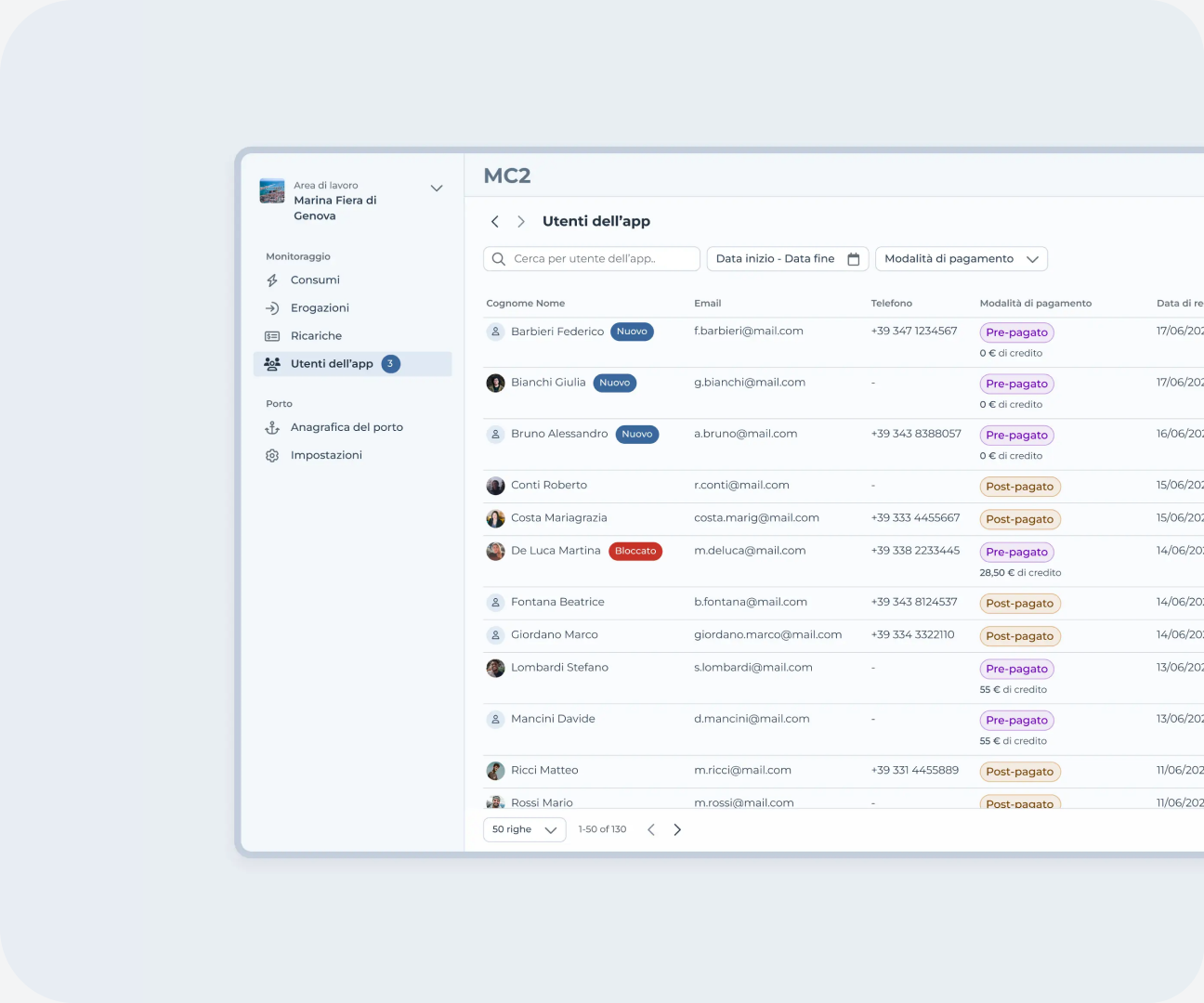
Port administration web
The manager configures tariffs, manages user credits, monitors every active delivery, and receives alerts on anomalies (offline pedestals, electrical issues, leaks, theft).
Hundreds of pedestals surveyed and operational, 3 ports active in Italy in the first cycle.
SHD Elettronica transformed its hardware pedestals into a complete port management platform. Ports can digitize existing infrastructure without replacing everything, with a flexible business model and operational visibility that didn't exist before. Manual billing gone, consumption tracked precisely, anomalies detected in real time.
IoT & Edge Computing architecture
The infrastructure optimizes port connectivity through a Zigbee mesh network managed by edge gateways with AWS IoT Greengrass. This local layer processes data via MQTT (Moquette), cutting latency and keeping delivery to AWS IoT Core even with intermittent connectivity. System resilience comes from automatic Bluetooth failover, so the mobile app can talk directly to the hardware when the network is down and sync logs when the signal returns.
The backend, fully serverless on AWS (Lambda, RDS, DynamoDB), automates billing and pedestal autodiscovery — a scalable architecture ready to integrate with third-party management systems via webhooks.